
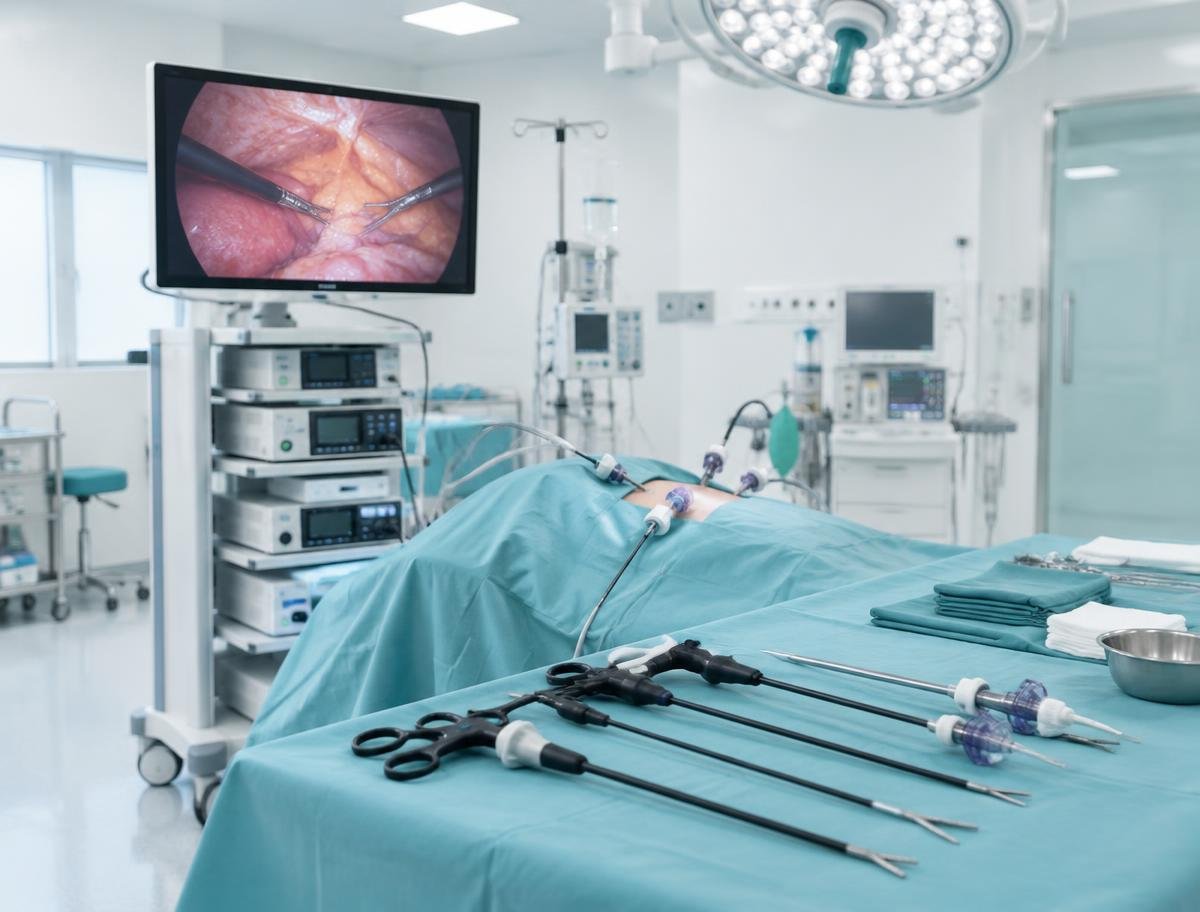
Understanding Fibroid Treatment
Fibroids vary in size, number and location — inside the cavity, within the muscle wall, or on the outer surface. Their position largely determines symptoms and treatment.
Options range from monitoring and medicines to hysteroscopic removal or laparoscopic myomectomy, depending on symptoms and your plans for pregnancy.
Who may need this?
It may be considered in situations such as the following. Suitability is always decided after individual assessment.
- People with heavy or prolonged periods due to fibroids.
- Those with pelvic pressure, pain or frequent urination.
- People with fibroids that may affect fertility or pregnancy.
How does it work?
- 01
Assessment
Ultrasound to map size and location.
- 02
Discussion
Options weighed against symptoms and future plans.
- 03
Treatment
Monitoring, medicines or surgery as appropriate.
- 04
Follow-up
Review of symptoms and any recurrence.
Potential benefits
- Relief from heavy bleeding and pressure symptoms.
- Possible improvement in fertility in selected cases.
Important considerations
- Not all fibroids need treatment.
- Fibroids can recur after removal.
- Surgery carries risks including bleeding and infection.
Preparation and recovery
- Bring previous scans and blood test results.
- Note bleeding patterns and symptoms.
After the procedure
- Recovery depends on the procedure — from a day or two after hysteroscopy to a few weeks after laparoscopic myomectomy.
This information is educational and does not replace an individual medical consultation. Outcomes vary and no treatment can guarantee a particular result.