
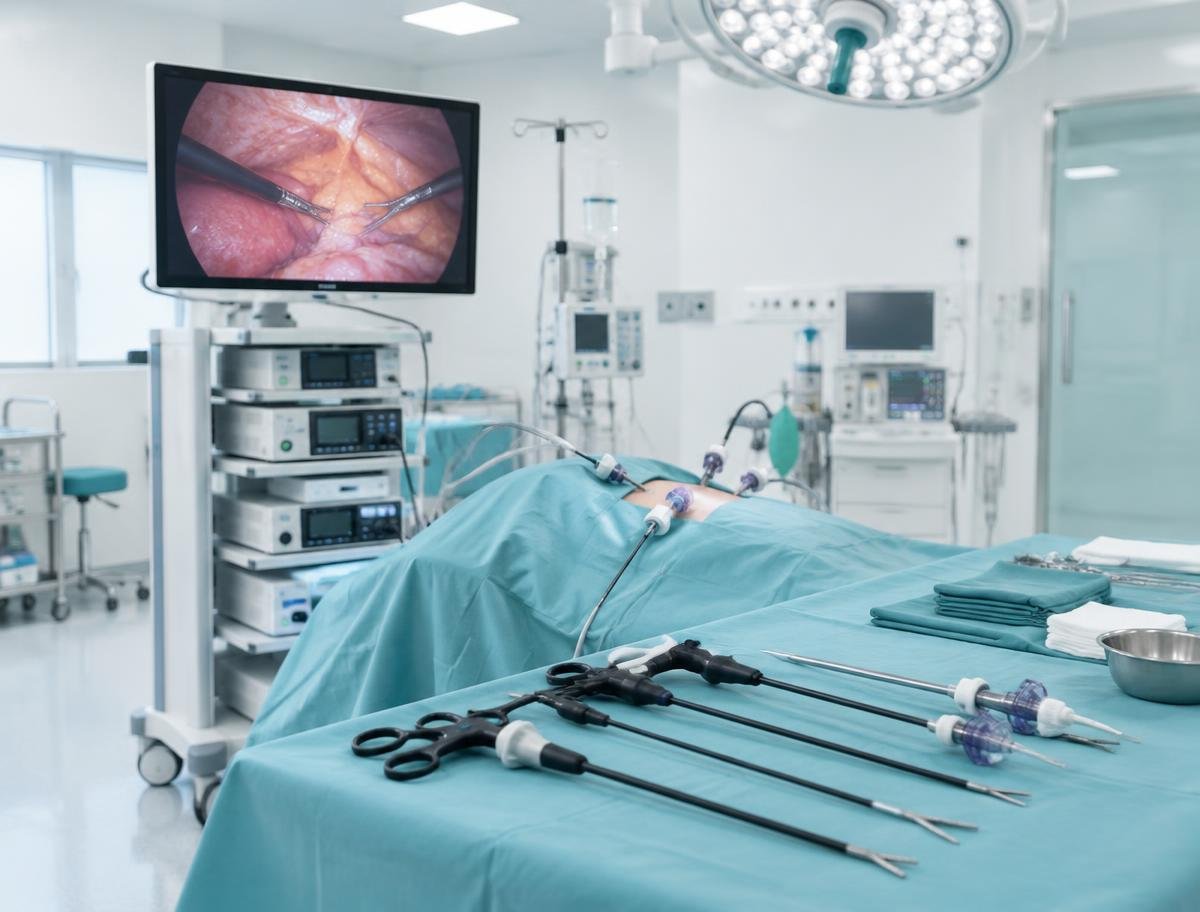
Understanding Laparoscopy
Under general anaesthesia, the abdomen is gently inflated with gas so the surgeon can see the uterus, tubes and ovaries on a monitor. Instruments are inserted through small additional incisions.
Laparoscopy can be diagnostic — to find a cause of pain or infertility — or operative, to treat conditions such as endometriosis, ovarian cysts, some fibroids or tubal problems.
Who may need this?
It may be considered in situations such as the following. Suitability is always decided after individual assessment.
- People with suspected endometriosis or chronic pelvic pain.
- Those with ovarian cysts or certain fibroids.
- Some people being evaluated for infertility or tubal disease.
- Conditions such as ectopic pregnancy, which can be urgent.
How does it work?
- 01
Pre-operative assessment
History, examination, scans and fitness for anaesthesia.
- 02
Consent discussion
Benefits, risks, alternatives and the planned approach are explained.
- 03
Surgery
Performed under general anaesthesia through small incisions.
- 04
Recovery
Monitoring after surgery; many people go home the same or next day.
- 05
Follow-up
Review of findings and next steps.
Potential benefits
- Smaller incisions than open surgery.
- Often less pain and a quicker return to activity.
- Allows diagnosis and treatment in one procedure.
Important considerations
- Not every condition is suitable for laparoscopy.
- Risks include bleeding, infection, injury to nearby organs and anaesthetic complications.
- Occasionally conversion to open surgery may be needed.
Preparation and recovery
- Follow fasting and medicine instructions given by the treating team.
- Bring previous surgical records and scans.
- Arrange someone to take you home.
After the procedure
- Shoulder-tip pain from the gas and mild abdominal discomfort are common for a few days.
- Light activity is encouraged early; return to work typically takes from days to a couple of weeks depending on the procedure.
- Contact the clinic for fever, increasing pain, or wound redness.
This information is educational and does not replace an individual medical consultation. Outcomes vary and no treatment can guarantee a particular result.